

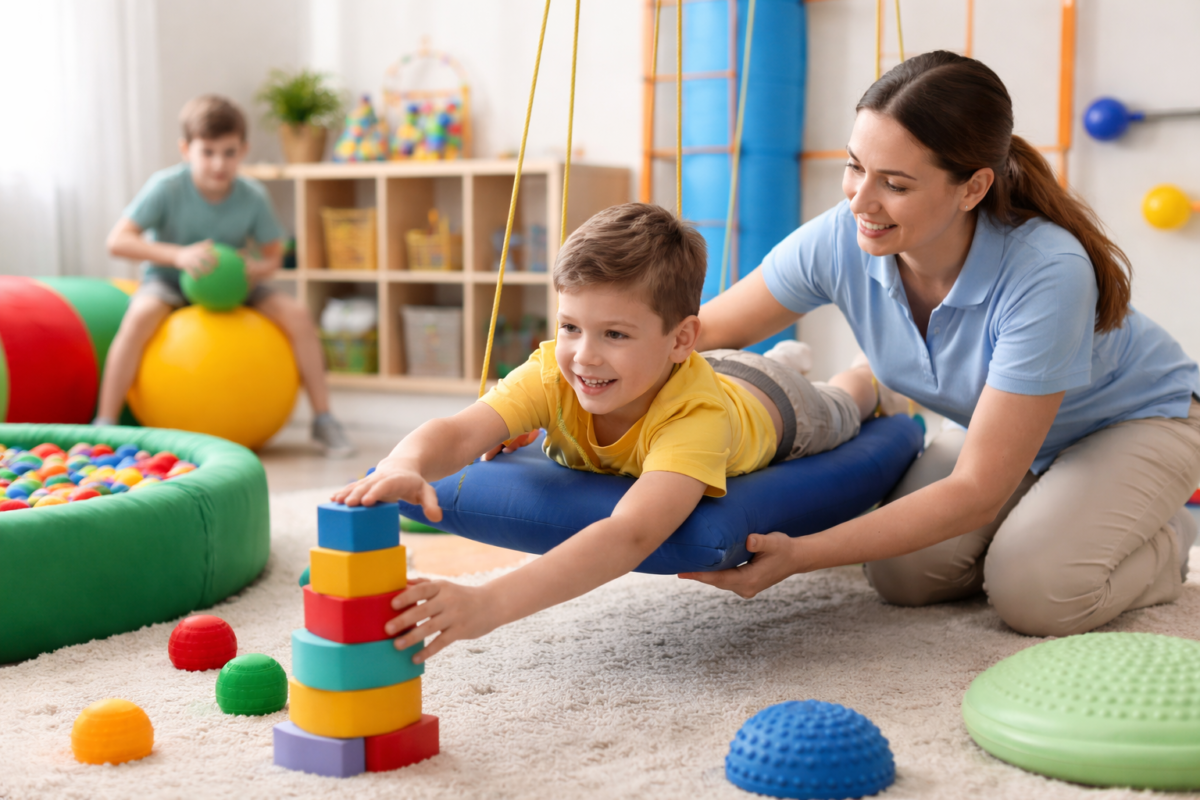
Strong social skills are essential for children to form healthy relationships, communicate effectively, and navigate everyday interactions. Yet, many children, especially those with developmental delays, behavioral challenges, or learning differences, struggle with social communication. Recognizing this need, Angels Foundation in Gurugram has built a comprehensive social skills development program that focuses on building confidence, self-awareness, and meaningful interaction in children.
Social skills are not limited to conversation. They include understanding body language, following rules, sharing, taking turns, interpreting emotions, resolving conflicts, and adapting to social expectations. The Foundation’s program is structured to break down these complex skills into manageable steps, allowing children to learn through repetition, guided practice, and real-life application.
One of the program’s strengths lies in its structured group sessions. Small groups of children participate in activities designed to encourage cooperative play and interaction. These include role-playing, storytelling, team-based tasks, guided conversations, and structured games. Through these activities, children learn to take turns, listen to others, express their own thoughts, and negotiate during group tasks. Facilitators carefully model appropriate behavior and provide immediate feedback, helping children internalize what positive social interaction looks like.
Another central element is social-emotional learning. Many children face difficulty interpreting emotions, both their own and those of others. The Foundation supports them through exercises focused on identifying facial expressions, labeling emotions, understanding triggers, and learning appropriate responses. Children are taught how to express frustration, excitement, or disappointment in safe and respectful ways. These skills form the foundation for self-regulation, which is crucial for making and maintaining friendships.
Real-world practice is a key feature of the program. Social interactions are integrated into the child’s routine through classroom collaborations, supervised peer play, outdoor activities, and community exposure. These experiences allow children to apply their skills outside controlled environments. Over time, this builds confidence and enables them to navigate unpredictable social situations more independently.
The Foundation also recognizes the role of communication in building social competence. Some children may rely on alternative communication methods such as gestures, visual aids, or assistive devices. Teachers ensure that every child has a way to express themselves effectively. By supporting both verbal and nonverbal communication, the program becomes inclusive and accessible to children with varying needs.
Parents are active partners in this journey. Workshops and guidance sessions help parents reinforce social skills at home through structured routines, play-based learning, and consistent language. When supported by caregivers, children show faster improvement and greater independence in social situations.
Angels Foundation’s social skills program empowers children to build friendships, navigate emotions, and participate meaningfully in their communities. Through patient guidance and structured learning, the Foundation is helping children develop the confidence they need to grow into socially aware and emotionally balanced individuals.