

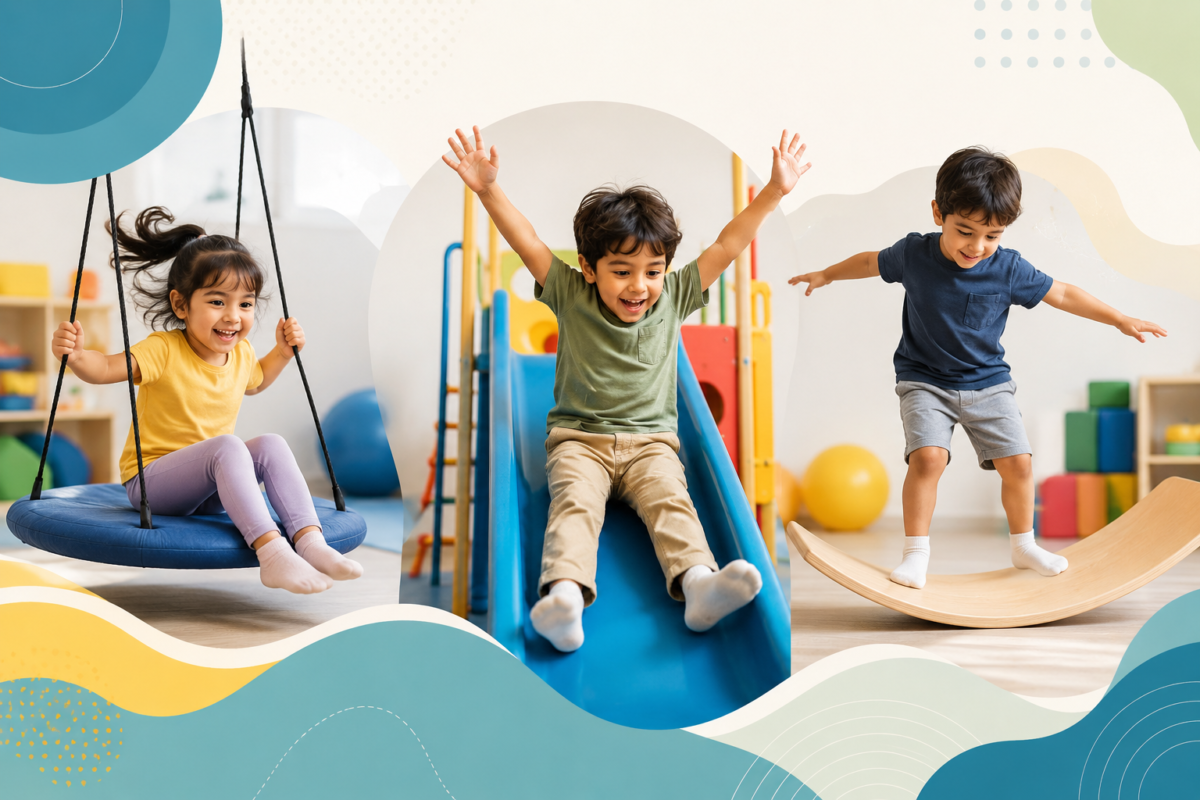
At Angels Foundation, we believe that movement plays an important role in a child’s overall development. Activities such as spinning, swinging, sliding, jumping, and balancing are not just enjoyable for children, but also help strengthen an important sensory system called the vestibular system. This system helps children understand movement, balance, body position, and coordination. When vestibular input is properly developed, children often show better focus, improved posture, stronger motor skills, and increased confidence in daily activities. Many children naturally seek these experiences through play because their brains use movement to learn and grow.
In our centre in Gurugram, we regularly observe how vestibular activities support children with sensory and developmental challenges. Some children may avoid movement because they feel insecure or uncomfortable, while others may constantly seek movement by jumping, spinning, or running. Both situations may indicate that the vestibular system needs support and regulation. Through carefully planned sensory activities, therapists help children improve balance, coordination, attention span, and body awareness. Activities like trampoline exercises, obstacle courses, balance boards, scooter boards, and swinging are commonly used to create a safe and engaging sensory experience. These activities also support classroom readiness by helping children stay calm, attentive, and physically organized during learning tasks.
At Angels Foundation, we understand that every child responds differently to sensory input. Our therapy programs are designed according to the individual needs of each child, ensuring that vestibular activities are introduced in a gradual and supportive manner. Occupational therapists closely monitor how children react to movement-based exercises and adjust activities to help them feel comfortable and confident. Parents are also guided on how to include simple vestibular activities at home, such as playing on swings, practicing balance games, or encouraging outdoor movement. Consistent sensory experiences can positively influence emotional regulation, concentration, social participation, and independence in everyday life.
Vestibular input is not only important for physical growth but also for emotional and cognitive development. Children who receive the right sensory support often become more confident in exploring their surroundings and participating in school and social activities. Early identification of sensory difficulties and timely intervention can make a meaningful difference in a child’s progress. With the right guidance, movement can become a powerful tool for learning, self-regulation, and overall development.