

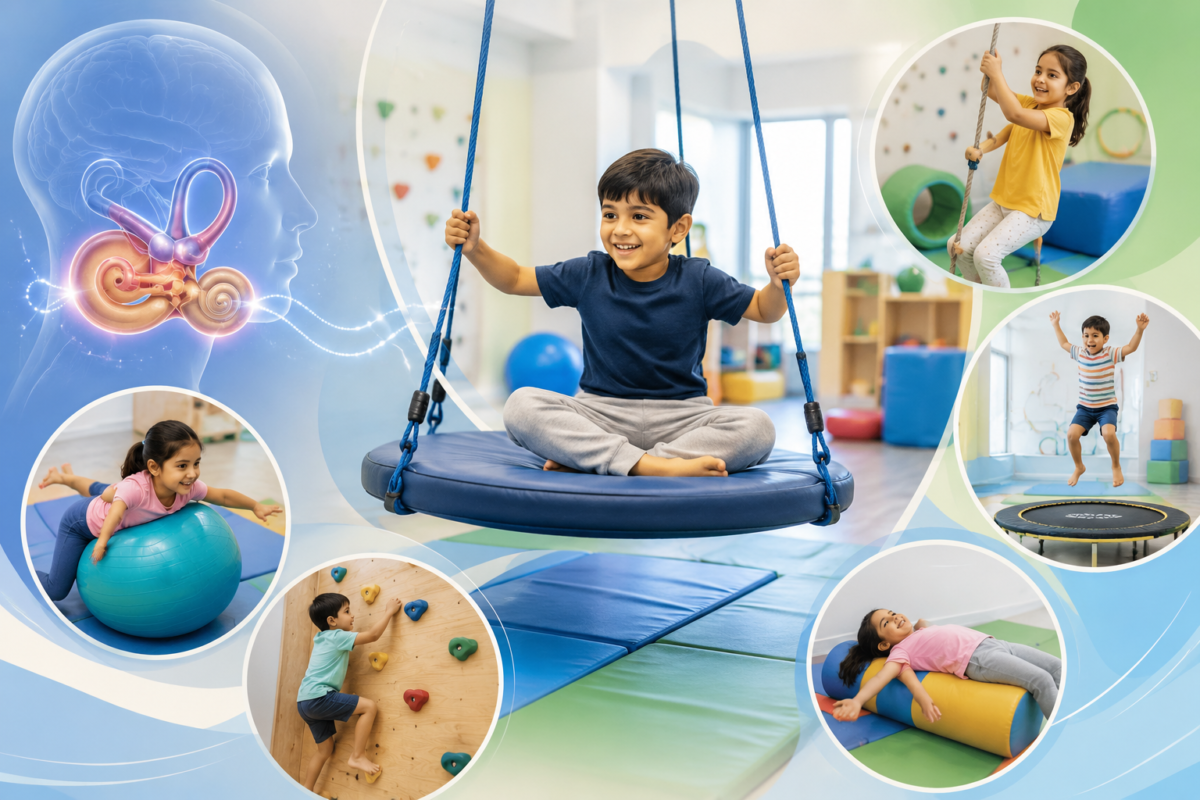
Understanding the Power of Movement for Sensory Regulation
Vestibular activities are movement-based strategies designed to provide vestibular sensory input, which helps children regulate their bodies and minds. The vestibular system, located in the inner ear, plays a crucial role in balance, coordination, spatial awareness, and movement processing. For many children, especially those with sensory processing challenges, vestibular activities can be an effective way to improve focus, reduce anxiety, and promote self-regulation.
At Angels Foundation, Gurugram, we recognize the importance of sensory integration in a child’s overall development. Vestibular activities are carefully incorporated into therapy programs to help children build confidence, enhance body awareness, and improve their ability to respond appropriately to sensory information from their environment.
In our centre in Gurugram, therapists use structured and individualized vestibular activities based on each child’s unique sensory needs. These activities are designed not only to provide movement but also to support emotional regulation, attention, motor planning, and social participation in daily life.
At Angels Foundation, our goal is to create a supportive environment where children can develop essential skills through engaging and meaningful sensory experiences. Vestibular activities are integrated into therapy sessions to help children feel calm, organized, and better prepared to learn and interact with the world around them.
What Is Vestibular Sensory Input?
The vestibular system detects movement and changes in head position. It helps the brain understand where the body is in space and contributes to balance, posture, and coordination. When children receive appropriate vestibular input, they often experience improved attention, better motor control, and increased emotional stability.
However, some children may seek excessive movement, while others may avoid it. Understanding their individual sensory needs is essential for choosing the right vestibular activities.
Benefits of Vestibular Activities
Vestibular activities can provide numerous developmental and therapeutic benefits, including:
Improved Focus and Attention
Movement activities can help children become more alert and ready for learning tasks.
Better Emotional Regulation
Vestibular input can have a calming effect, helping children manage stress, frustration, and sensory overload.
Enhanced Balance and Coordination
These activities strengthen the body’s ability to maintain stability and move efficiently.
Increased Body Awareness
Children develop a better understanding of their body position and movement in space.
Support for Sensory Processing
Regular vestibular experiences help the brain process sensory information more effectively.
Examples of Vestibular Activities
Some commonly used vestibular activities include:
- Swinging on different types of swings
- Rocking in a rocking chair
- Spinning activities under supervision
- Jumping on a trampoline
- Rolling on therapy balls
- Climbing playground equipment
- Dancing to music
- Scooter board activities
- Obstacle courses
- Skipping, hopping, and jumping games
These activities should always be selected according to the child’s sensory profile and tolerance levels.
Tips for Safe Vestibular Activities
- Start with short durations and gradually increase as needed.
- Observe the child’s responses carefully.
- Ensure activities are supervised by trained professionals or caregivers.
- Balance active movement with calming activities.
- Follow individualized therapy recommendations.
Conclusion
Vestibular activities are valuable tools for helping children achieve better sensory regulation, focus, and emotional balance. When incorporated appropriately, these movement-based strategies can significantly enhance a child’s ability to participate successfully in daily activities, learning, and social interactions. With the right guidance and support, vestibular input can become a powerful pathway toward improved development and overall well-being.