

Understanding Social & Functional Communication Challenges
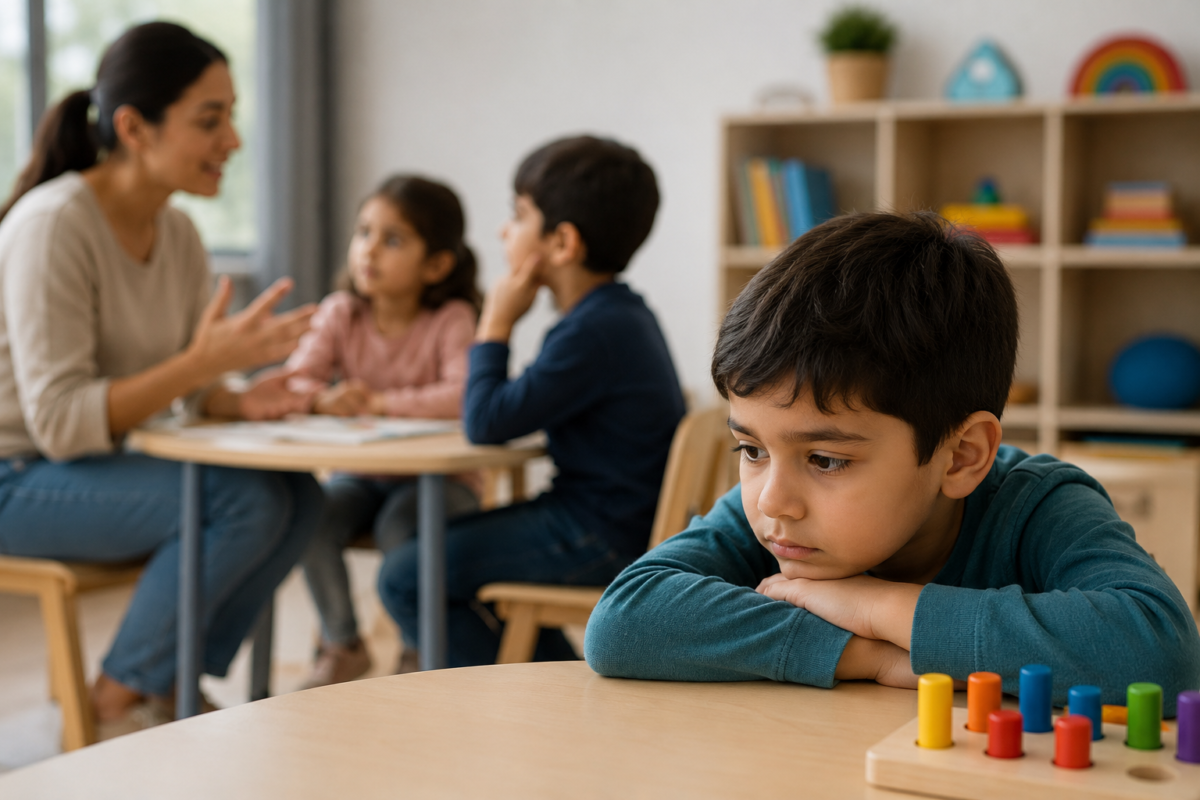
Imagine your child confidently answering questions at home but becoming completely silent in the classroom or around unfamiliar people. Many parents wonder, “My child knows the answer—so why won’t they say it?” The truth is, this is not always about shyness, stubbornness, or lack of confidence. It may be linked to challenges in social communication and functional communication skills, which affect how children interact, express themselves, and connect with others.
Understanding Social & Functional Communication
At Angels Foundation, Gurugram, we understand that communication is much more than speaking. It includes initiating conversations, maintaining eye contact, understanding facial expressions, interpreting body language, taking turns during conversations, and expressing thoughts in different social situations. Children with social communication difficulties may know exactly what they want to say but struggle to express it when the moment arrives.
Common Signs to Watch For
In our centre in Gurugram, therapists often observe children who display one or more of the following signs:
Difficulty Initiating Conversations
Your child may wait for others to speak first or avoid starting conversations altogether, even when they know the answer.
Limited or Poor Eye Contact
Some children find maintaining eye contact uncomfortable, making social interactions seem difficult or awkward.
Trouble Understanding Social Cues
Recognizing facial expressions, tone of voice, gestures, or knowing when it’s their turn to speak can be challenging, leading to misunderstandings or hesitation.
Reduced Confidence in Social Settings
Children may participate freely at home but become quiet in school, playgrounds, or group activities because social situations feel overwhelming.
How Occupational Therapy Can Help
At Angels Foundation, our Occupational Therapists and Speech Therapists work together to help children develop strong social communication skills. While both professionals share the common goal of improving communication, each brings a unique perspective. Occupational Therapists build the underlying skills needed for successful social participation, while Speech Therapists focus on language, pragmatic communication, and interaction skills.
Occupational Therapists help by:
• Building confidence in social interactions.
• Improving turn-taking, emotional regulation, eye contact, and participation through play, role play, and group activities.
• Teaching children to understand routines and social expectations.
Speech Therapists help by:
• Developing verbal and non-verbal communication.
• Improving conversation initiation, pragmatic language, understanding social cues, and maintaining conversations.
• Helping children express thoughts and interact effectively in different settings.
Together, this collaborative approach helps children develop both the foundational skills and the communication abilities needed to build meaningful social relationships at home, school, and in the community.
- Building confidence in social interactions.
- Improving conversation initiation and turn-taking.
- Enhancing eye contact naturally without forcing it.
- Teaching recognition of social cues through structured activities.
- Strengthening emotional regulation to reduce anxiety during communication.
- Practising real-life situations through role play and group sessions.
These strategies help children become more comfortable expressing themselves across different environments, including home, school, and the community.
Supporting Your Child at Home
Parents play a vital role in nurturing communication skills. Encourage open conversations, allow extra time for responses, celebrate small communication successes, model positive social interactions, and create opportunities for your child to interact with peers in low-pressure settings.
Every Voice Deserves to Be Heard
Every child communicates differently, and silence does not mean they have nothing to say. With early identification, consistent support, and the right therapeutic approach, children can build the confidence and skills needed to express themselves effectively.
If your child struggles with social communication, remember that early intervention can make a meaningful difference. With the right guidance, every child can learn to connect, communicate, and thrive.